top of page

Muslin Sarees
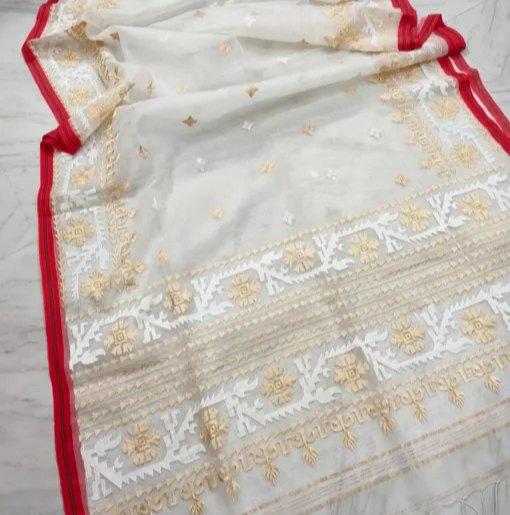
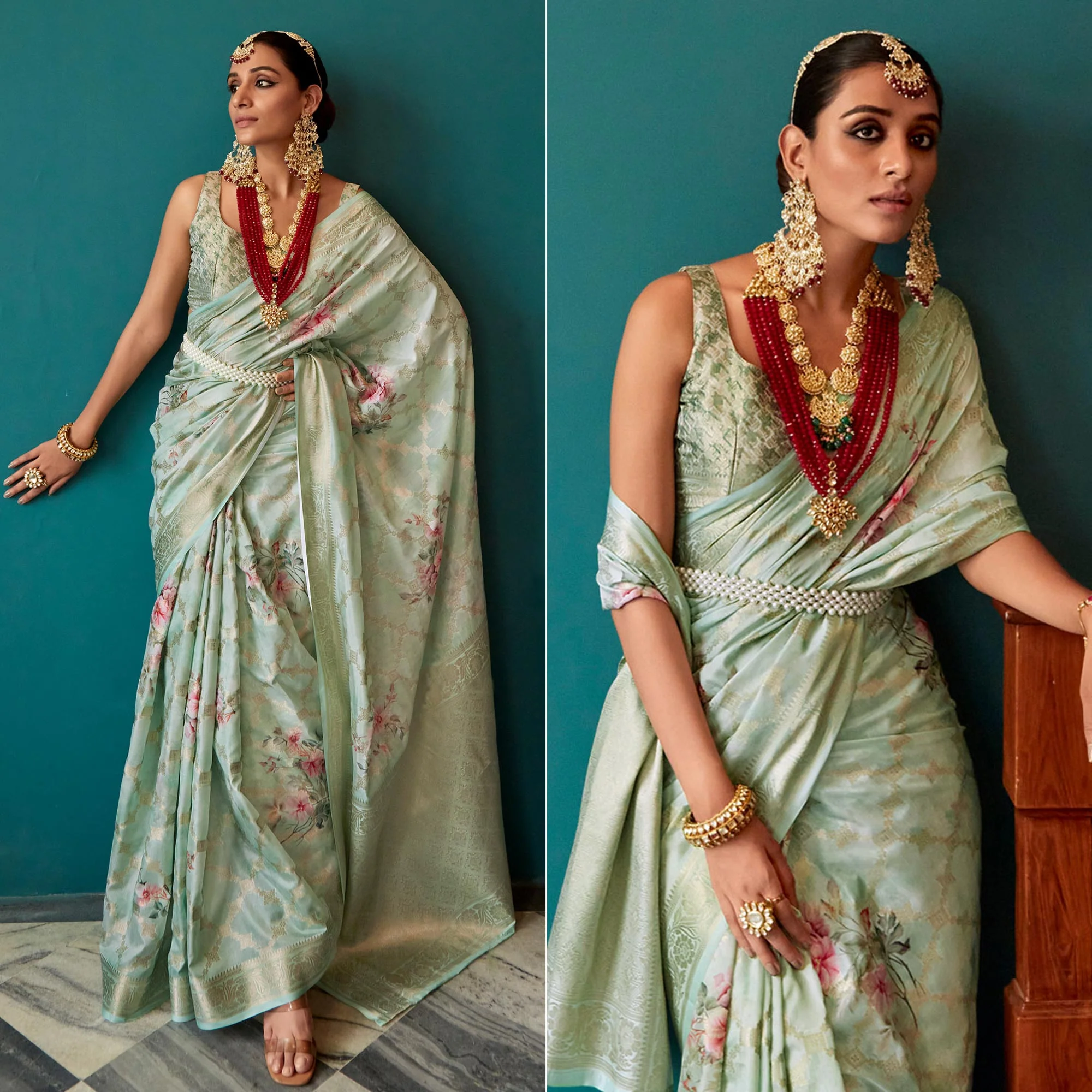
Muslin is one of the most intriguing and exotic fabrics recognised globally. It is crafted from the finest type of cotton cultivated in Bengal, resulting in a nearly transparent, silky, ultra-light, and glossy material that is celebrated for its texture worldwide.
A Brief History
The earliest documented mention of muslin fabric can be traced back to Chanakya’s Arthashastra, dating from the 4th century BC. Throughout the ages, numerous travelers from the Roman Empire, Greece, Egypt, and England have noted this exceptional cotton from Bengal in their writings. During the Mughal era in India, muslins produced in Dhaka enjoyed royal endorsement, and garments crafted from this fabric symbolized royalty and nobility. Portuguese, Dutch, and English merchants imported these textiles from India to much of Europe. The fabrics were highly valued for their quality and were utilised to create stylish gowns and dresses. Trade flourished with the Middle East, China, Japan, and other Asian regions. However, in the 18th century, the British established a monopoly over the textile trade in Bengal, effectively pushing out other European and Asian traders. Consequently, they forced weavers to accept lower prices for their textiles. This situation led to a gradual decline in Bengal's textile manufacturing industry. The ultimate demise of the muslin trade occurred during the industrial revolution in Britain, when cheaper, machine-produced goods flooded the market, resulting in the eventual extinction of the renowned fine muslin textiles from Bengal.
After a lengthy period of decline, there is a revival of the muslin weaving industry in West Bengal and Bangladesh, supported by governments, NGOs, and research organisations. Initiatives are underway to restore and promote many of the traditional weaving techniques and textile production methods that were lost. Through these efforts, the rich heritage of Bengal muslin is gradually re-entering the global consciousness.
The Muslin Fabric
The muslin fabric originates from a high-quality type of cotton that is native to the area surrounding Dhaka along the Brahmaputra river. Factors such as soil quality, moisture levels, and other environmental conditions play a significant role in the growth of the renowned muslin cotton plant. The threads derived from this cotton are both soft and durable, handwoven into exquisitely fine and beautiful muslin fabrics. Over time, specialised skills have developed and been handed down through generations, utilised in the spinning and weaving of this unique muslin fabric. Muslins are classified according to the fabric's fineness: mulmul khas (or king’s muslin) represents the finest type, where an entire dress or saree can pass through a ring. Abrawan (or running water) is the second finest variety of muslin, which famously led Emperor Aurangzeb to scold his daughter for being immodestly dressed, even though she was wrapped in seven layers of muslin! The third, fourth, and fifth best varieties of muslin are named Shabnam (or evening dew), circar ali (or supreme ruler), and tunzeb (or ornament of the body), respectively.

01
Muslin Sarees


bottom of page