top of page

Kantha Sarees
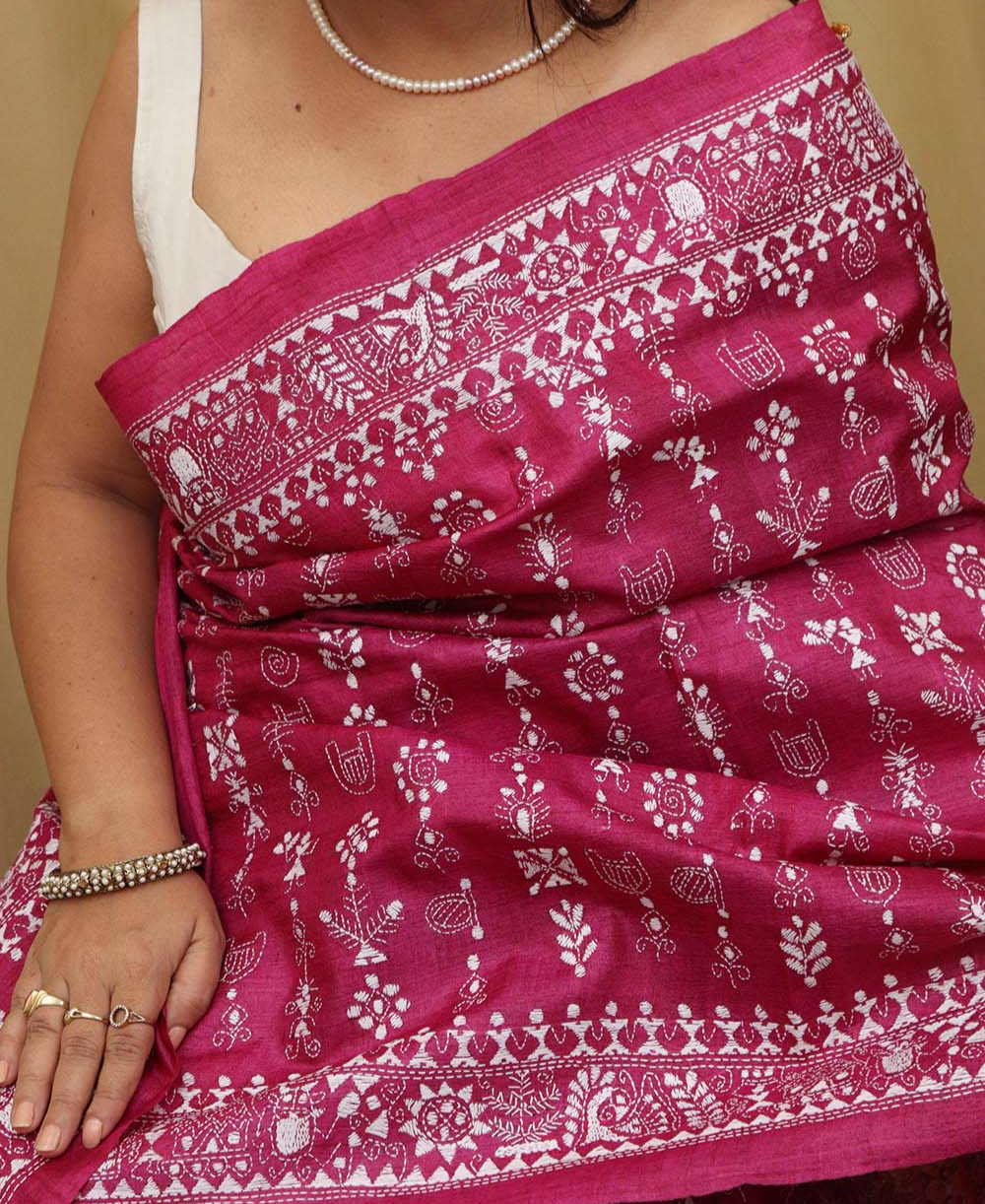
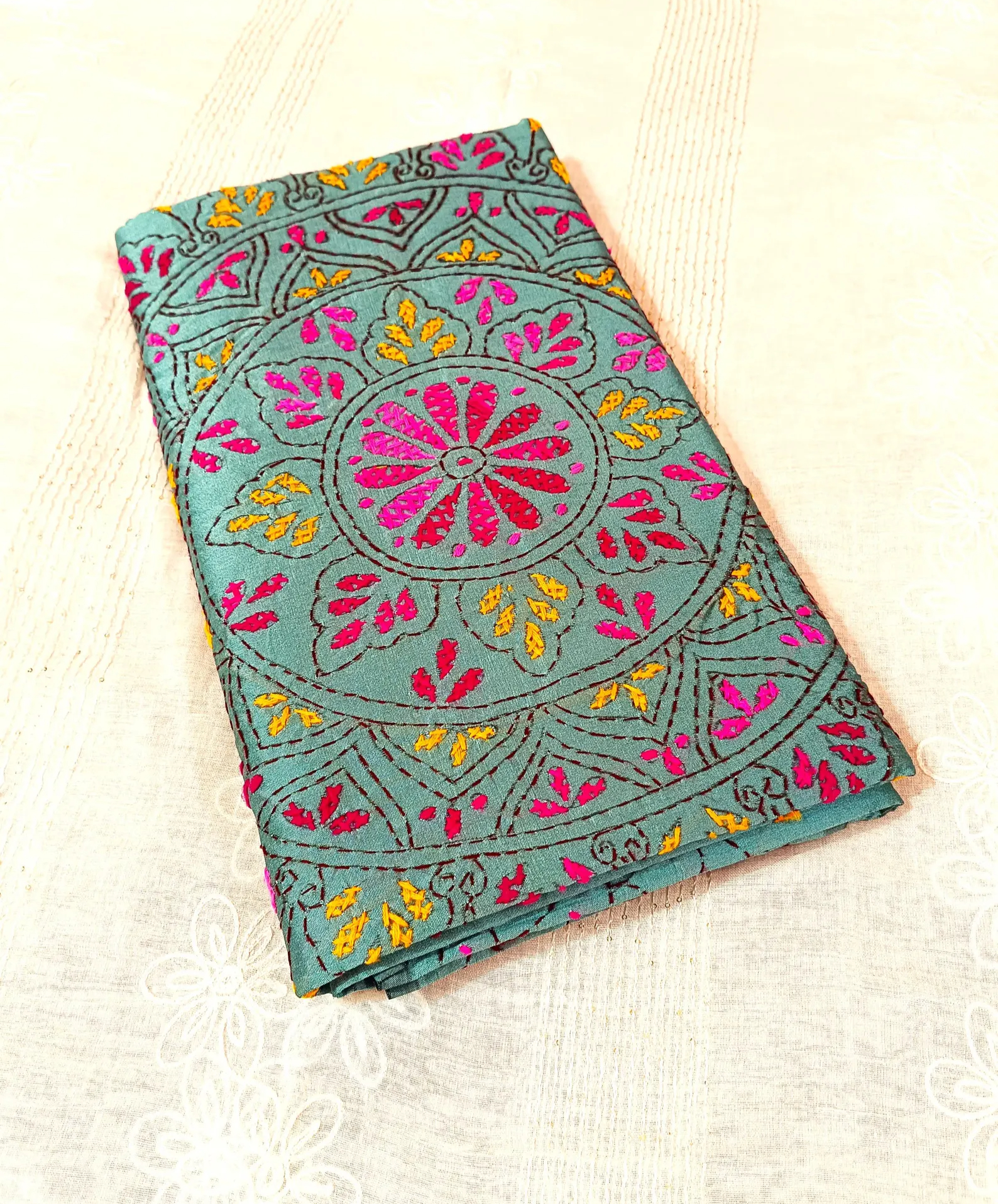
Kantha is an embroidery technique that hails from Bolpur in the Birbhum district of West Bengal. Originally employed to embellish quilts, this style has gained popularity on sarees, dupattas, kurtas, and even home decor items like bedcovers and cushions.
Brief History
The term "kantha" in Bengali refers to an embroidered quilt. Traditionally, these quilts were crafted by women in rural Bengal using recycled sarees and dhotis. They would layer 3-4 pieces of old sarees or dhotis and employ colored threads from the border of one saree to stitch the layers together, creating beautiful embroidered patterns. The embroidery typically utilized a running stitch, which is why it is known as 'kantha stitch'. The finished quilts were lightweight, comfortable, easily washable, and perfect for wrapping newborns during the winter months. The vibrant patterns embroidered on these quilts led to the name "nakshi kantha", which comes from the Bengali word 'naksha', meaning artistic designs. Nowadays, nakshi kantha signifies highly intricate kantha patterns, which are now also featured on sarees, contributing to the immense popularity of kantha sarees in Bengal.
Kantha Fabric
Sarees adorned with kantha embroidery are usually crafted from pure silk, tussar silk, or cotton. Nowadays, these sarees are manufactured on a large scale, involving a range of participants including fabric wholesalers, skilled designers, and merchandisers. However, the embroidery work remains the domain of the rural craftswomen from Bolpur, who have been passing down this art through generations for centuries. The preparation of each saree can take weeks or even months, depending on the complexity of the embroidered designs. This complexity ultimately influences the final cost of a kantha saree.

01
Kantha Sarees

bottom of page